
Reflections on Faith and Scholarship in Singapore: A Conversation with Bruce Lockhart
Joshua Tan
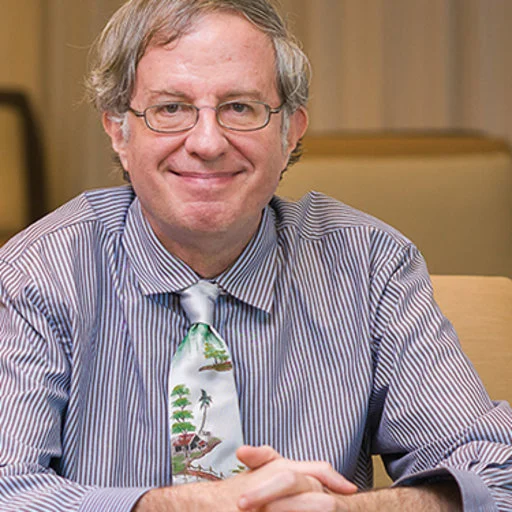
Editor’s note: Harvest & Wine is pleased to publish this interview conducted by Joshua Tan, a historian and Postdoctoral Research Fellow at the National University of Singapore. His interview with Professor Bruce Lockhart is illuminating – in its evidence of faithful service in scholarship and ministry, in its observations of religious diversity in the context of Singapore, and in its commitment to interreligious dialogue and faithful witness, all of which are a testament to a life of devotion and the beauty that it contains.
I met Professor Bruce Lockhart in the corridor of the NUS History Department on one of my first days as a postdoctoral fellow. It was the summer break of 2024, but Prof. Lockhart was still in the office. His door was ajar, and he greeted me as I walked past. I was struck immediately by his openness, generosity, and eagerness to engage on a wide range of topics. Even though he was a senior scholar nearing retirement, his sincerity and accessibility were disarming.
Trained as a historian of Southeast Asia at Cornell University, Bruce Lockhart received his PhD in 1990. He spent nearly a decade thereafter working through Christian organisations in Laos and Vietnam. Since 1998, he has taught Southeast Asian history at NUS, and since 2008, he has offered a highly subscribed course on the History of World Christianity.
What stood out to me in Prof. Lockhart’s academic profile was his insistence on pastoral care as a central part of his academic vocation—an unusual commitment within a secular university culture increasingly shaped by research outputs and competitive rankings. In an academic world where one’s status and salary are often inversely proportional to one’s teaching hours, this dedication could even be read as a quiet resistance to neoliberal institutional norms. Remarkably, Prof. Lockhart has never taken a sabbatical during his nearly three decades at NUS, nor has he opted for a reduced teaching load, even while serving as Vice-Dean of Graduate Studies in the Faculty of Arts and Social Sciences. The students I spoke with consistently praised his enthusiasm for teaching and his care for them.
Prof. Lockhart is expected to retire from NUS in 2026. I recently took the opportunity to record an oral history interview with him—not only to learn more about his personal story, but also to explore how his early intellectual and spiritual formation shaped his trajectory as both a Christian and a scholar. I was especially interested in his reflections on the state of Christianity and intellectual life in Singapore, in a context where the church and secular academy have long operated in largely separate spheres. These reflections are presented in a lightly edited interview transcript below.
Joshua Tan [JT]: Could you briefly introduce your early life and family, and some of the early influences which shaped your later trajectory as a Christian, scholar and teacher?
Bruce Lockhart [BL]: I really have to start with my family because both my parents were deeply Christian intellectuals, and they were both classicists. They met in graduate school at Yale. My dad was doing his PhD in classics, and my mom was doing her master’s in classics. I was raised to be what I call a thinking Christian. My parents never seriously considered sending me to a Christian college— this is a separate issue, but what has happened in the States is you have a lot of Christian schools, but with a few exceptions, many of them intellectually they’re not that good. Spiritually, yes, but academically, you have a few strong ones —maybe Calvin College and Wheaton and a few others—but for a lot of them, they are academically second-rate. My parents wanted me to have a good education at a secular school and learn to be a Christian in that environment. To grow up and be with educated parents who were also deeply committed Christians and deeply committed to serving God really had an impact on me.
Specifically for teaching, my Dad’s approach was that teaching was ministry, and that you couldn’t separate them. His first teaching job after he got his PhD was at the University of Pennsylvania. But then, because he felt it was too big and too bureaucratic and he didn’t have enough contact with students, he shifted to a small liberal arts college in the other part of Pennsylvania, where I grew up— Dickinson College. Dickinson is a very typical, reasonably good liberal arts college. My Dad and his colleagues made it one of the strongest classics departments in the country. But he pretty much spent all his time all day with students, and he took care of them the way that I take care of them. He probably had a somewhat better balance between male and female students. It’s a bit easier when you’re a married prof. to spend time with female students. When you’re single, it’s a little bit harder. That was the model that I grew up with. My Dad was conservative, but he was very tolerant of people who weren’t conservative. Those were his values, but there were very few of those things that my parents actively inculcated. That’s just what I grew up with.
So when I came here to Singapore, as I was settling down to be a professor, I wasn’t sure how it would play out. I didn’t know if students who called me “sir” could or would ever really feel comfortable coming to me with problems. Well, it took not very long to discover that no, that wasn’t an issue. If you are known as a professor who cares about students, the students will come. Many years ago, there was this American movie called Field of Dreams about baseball, and the famous phrase was “build it and they’ll come,” meaning that if you build the baseball field, they will come. Here, if you’re available, students will come, and the word got around— if you’ve got problems, go to Prof. Lockhart.
There are a reasonable number of Christian profs here at NUS. One of the reasons I’ve always been happy here is that it’s much easier to be a Christian here than it would be at any secular university in the States. But not many of them have, I think, a strong vision for campus ministry. A few do, but many don’t. And I’ve never been able to quite understand why. To me, logically, if you’re a Christian, you’re a Christian teacher. Your students are going to be a form of ministry, right? But for some of them at least, it’s just not. Of course, very early on, I set my own parameters. I don’t talk about religion or faith to a student unless they have expressed interest in it. I talk to students about whatever they want to talk about, and I never tell a student what they should believe. If they’re not interested in talking about religion or faith, we don’t talk about it. I get non-Christian students with all kinds of problems. I get Christian students with all kinds of problems.
There’s a particular category of Christian young adult — some of them are still in churches, some of them have basically left church because they had a lot of questions that simply didn’t get answered. And one problem with evangelical Christianity in Singapore is that it’s increasingly becoming more like American Christianity, in that it’s very non-intellectual and even anti-intellectual. Many churches are that way. So it helps Christian students or ex-Christian students when they have a professor who can sit down and talk about these things with them. I don’t just throw Bible verses at them. I have in certain ways more liberal perspectives on some things than their churches do, and [the students] really grab onto them. I tell them, “I want you to be a thinking Christian. I want you to know what you believe in.”
JT: Can you tell me about your own church background, the denomination you grew up with? [Prof. Lockhart is a church elder at Mount Carmel Bible-Presbyterian Church in Singapore] Did that shape your intellectual formations in any way?
I grew up in the mainline Presbyterian Church. Our church was a fairly moderate church in what was an increasingly liberal denomination. My parents did not particularly care for a number of things going on at the denominational level. For instance, my mom was an elder, and I grew up in a church where the ordination of women and things like that were accepted. It was not precisely liberal, but it was not precisely evangelical. It was somewhere in between.
Your formative years must have coincided with the anti-war protests in the United States. How did you encounter these political movements, and did they shape your early religious and intellectual formations?
By the time I was old enough to be paying attention, the war was over. Most of that stuff was really when I was in primary school. I was probably more affected by it retrospectively when I was at Cornell, because Cornell had been one of the more radical schools in those years, and there were still traces of it. A number of the people in the Southeast Asian program at Cornell had been anti-war and were relatively left in their position. And in terms of my views of Southeast Asia, and the idea that you—as a professor— could be an activist in political matters, that also was partially ingrained in me there. Now, I have closed that off by staying in Singapore, right? Because as a foreigner, I have zero option to be involved in anything political. I just accept that.
Certainly, my views on the Vietnam War had just switched diametrically over the years. I had originally been fairly pro-war, and then over time, I just came to feel that no, it was wrong. At Cornell, it was very hard to stay conservative on those kinds of issues—and I didn’t feel the need to. And I had professors that I respected a lot that had taken stands against the war, against Suharto and human rights violations and things like that. I was influenced by them on the more social and political side. But none of that ever shook the Christian side of me.
Back then, when you were still searching for your bearings as a scholar or intellectual as a younger person, were there any other people, other than your parents, who were role models for you in pursuing this academic vocation?
As Christians, very, very few. Because at a secular school like Cornell, there just weren’t many Christians. One of the very few Christian profs was in Chemistry. I believe, if I’m not wrong, he was a Nobel Prize winner. Occasionally, once a year or so, there would be a talk that the Christian profs would organise for students. But mostly, we were in our own groups, the CF, Campus Crusade, things like that. So no, I had relatively little contact on campus. But I read a fair amount of stuff. This was pre-internet, and I would go to the bookstore and the Christian bookstore and buy things and read them.
I was influenced by Tony Campolo and Ron Sider. For my generation, those were the people who were really challenging us [evangelicals] to think both intellectually and to be liberal on social issues. Ron Sider wrote this famous book called Rich Christians in an Age of Hunger (1977), which really, really impacted me a lot when I read it. And those were very minority voices in American evangelical Christianity then, and even today, they’re minority voices— because [American evangelicalism] is so conservative. But I was quite impacted by these voices.
Also, in my third year of my undergraduate studies, I spent that year in France, in Paris. And that was the year of the presidential election when the socialists got elected for the first time. So I was much more exposed to a kind of democratic socialism and something a bit more left than the Democratic Party in the US. I think, then also politically, I was impacted by that.
After you completed your graduate work at Cornell, you spent a number of years in Laos and Vietnam working through Christian institutions. Could you talk a little bit about that chapter?
I finished my PhD in 1990, and then it took me about a year to find something. I was in Laos from 1991 to 94. Then I left, and then took me another year to make my way to Vietnam, and I went into 1995, and I was there from 1995-1998.
In Laos, I was working for a development NGO. The project I was working on was with the national bank, in the state bank, because they were in the process of switching over from the socialist system to the Western [capitalist] system. And not only did they need to learn about western banking and finance, but they needed to learn English, because they’d all been trained in Vietnam and in the socialist countries in Europe. So that’s what I did there for three years. In Vietnam, it was just more regular teaching. So I lived for six years under communist parties. And even though by that time, it was a more mellow communism than before, I still have a pretty good understanding of what communism is all about.
In Laos, there were very few Americans at that time, because Laos was only just starting to open up. And Vietnam and the U.S. only established relations in the summer of 1995, the month that I got there. Gradually, more Americans came in. But neither Laos nor Vietnam had large foreign communities, especially outside the development and aid groups.
I didn’t really plan to go to Laos to begin with. That’s what God planned. I wanted to go to Vietnam. But God opened the door to Laos first. And there, I just wanted to have the experience of being there and working for a mission organisation. Laos had virtually no academic system to speak of, but Vietnam did. So when I went in there, it was logical to be involved with universities.
I didn’t really plan to go to Laos to begin with. That’s what God planned. I wanted to go to Vietnam. But God opened the door to Laos first. And there, I just wanted to have the experience of being there and working for a mission organisation. Laos had virtually no academic system to speak of, but Vietnam did. So when I went in there, it was logical to be involved with universities.
If I had gone maybe 10 years later, I probably could have found a longer-term university position, because now they have the Fulbright University Vietnam, and so on. When I was there in the mid-90s, there were really no foreigners there in long-term positions. It was a year of this, and a few months of that. That was one of the main reasons that I came here [NUS] because I didn’t see anything more long-term and stable shaping up in Vietnam.
How did the position at the National University of Singapore come about? When you arrived in Singapore, what were some of the communities that you were a part of?
I knew about NUS because a couple of my seniors from here had been at Cornell. A friend of mine, Nora Taylor, was then working at NUS. She’s one of the few people who works on Vietnamese art history, performance art; we had known each other first at Cornell, and worked together in Hanoi. She got her first job here, and she actually had this office. I had been in touch with her, and she said, “I’m leaving, I’m going to the U.S., you should see whether they’d be interested in you.” I wrote initially to the Southeast Asian Studies Department, and they weren’t interested, but they sent my file over to the History department. Because she was the only scholar of Vietnam, and she was leaving, they were interested in me, so they flew me over here for a campus visit.
Initially, it was mainly the academic community at NUS. I didn’t settle down in my current church right away. For six months, I attended Pasir Panjang Hill Brethren Church because one of their church elders was on the NUS staff here in Chemistry, and somehow, we got connected. That church was okay, but I didn’t feel that it was exactly the church for me. And because I was living in Kent Vale at the time, Mount Carmel [Bible Presbyterian Church] is at the bottom of the hill. I didn’t know Bible Presbyterian was, but at least it was Presbyterian. I’d never been to another Presbyterian church except the one I grew up in. I went there, and I settled in there. And I gradually became more involved with that community. But my main community was almost always here in terms of colleagues and members of the students at NUS.
Could you share a bit about your ministry and involvement with the church in Singapore?
For a number of years, I was involved with an English language outreach for PRCs [immigrants from the People’s Republic of China]. We had a class every Saturday afternoon, and I taught that for a number of years, then I became the deacon overseeing the ministry. Then I was bumped up to elder. Elders in our church have a very broad portfolio based on our interests and our skills. Mine was a little bit of teaching, definitely preaching. I preach for the adult service a few times a year and also preach for the youth. For the youth, I’d basically do whatever they ask me to do.
It’d be preaching a couple of times a year. Once in a while, I’d do an ask me anything session— I do that for some other churches too. One of my former students is now the youth pastor at Bukit Panjang Gospel Chapel, and he asked me to go and do three sessions for his youth on where the Bible comes from, and how I can believe it is credible. These were based on talks I’ve given on campus to Christian groups, and so they kind of fed into each other.
I have mainly been involved with young adults. Last year was exceptional as I was heading the ministry because there was nobody else to do it. Normally, I’m just doing it one-on-one, so I spend time with some of the young adult guys, and get together when we can. There’s one of the cell groups in the young adult ministries where there are almost all uni-age students, and a number of them are here, so I try to spend time with them when I can. I have reached out to a couple of youth, but taking care of pre-NS youth [teenagers] is a lot more complicated, and it’s harder to nail them down. That has had more mixed results. But with young adults, there’s not a big difference if the student I’m taking care of is from my church or not.
How do your commitments towards mentoring and pastoral care feature as part of your vocational identity? What does it look like in practice?
It can often start very randomly. One thing I learned very early on was that students, particularly male students, can be very responsive when you reach out to them when they don’t expect it. Let’s say someone has gone missing from class. Now, some colleagues would just send a standard note. I always make it nice. I’d always say, look, I know from experience, usually if students are missing us because they’re having problems; I deal a lot with student problems, feel free to come and talk to me. That often gets their response. Once in a while, of course, they’re just beyond my reach. Sometimes I have to reach out to them, sometimes they will come and look for me first. Sometimes it really is just sort of chance; chance in a sense that maybe I just happened to run into them at a time when they were feeling a little bit down, but it becomes a virtuous cycle. The more you do, the more you’re known for it, the more students will come. Sometimes students will bring their friends. I had a student a couple of weeks ago who said, “Prof, do you take referrals? I want to bring my friend to you.” It happened that I also knew that student, but I had never interacted with him outside the classroom. But that’s because they know you’re there.
I have some students that I classify as real mentoring relationships. I would meet with those guys on a somewhat regular basis, have meals with them, and if they’re Christians, I’m supporting them at whatever ministry they’re doing in church. If they’re not Christians, then I’m supporting them in academics and personal life, essentially, whatever they need. Others are more purely pastoral care, where it’s very much on an as-needed basis, where, when they need something, they’ll come to me.
In most cases, they’re students whom I have taught. Once in a while, there’ll be a student that I didn’t teach, but students who are Christians and who know I’m a Christian prof, and they’ll come to talk to me about all kinds of things.
How about your involvement with Christian ministries on campus?
I’m a staff advisor for CRU. I’m not very actively involved with them because they have their own full-time staff. And just to make you feel my age, one of the current staff members, his mother, was my meimei [younger sister] at my fellowship at Cornell. This is one of the full-time staffers—she has four sons. I taught one of them last year, and then this one has come on staff with CRU. I remember their mom as this 18-year-old freshman, and now these guys. For CRU, it’s also on an as-needed basis. Several times I have talked to their freshman camp. I have a standard talk that I give for Christian students on how campus can be your ministry base.
Once in a while, not every year, the campus groups get together and have what they call a dedication service, where Christian profs and Christian student groups come and we all have some sharing and pray together for the campus. I have given talks there a couple of times. And then two or three times I’ve done other talks for groups, more generic evangelistic ones. Once or twice, I’ve done other talks, like when Easter’s coming around, they’ve asked me to do “a historian looks at the resurrection.” My principle is that whatever students ask me to do, I will do, because that was my father’s principle too.
My Dad’s principle was that if someone wants to listen to you and asks you to talk, you should go. My dad had a PhD from Yale. He was a very intelligent man, and he trained a lot of Latin teachers, just the way I train high school history teachers. And if one of his former students asked him to go to their secondary school class and talk about why it was useful to learn Latin, he would go. If some church of undereducated people— that would now be MAGA supporters—asked him to go and teach the Bible, he would go. He never felt that he was too good.
Can you tell me a bit about how you started to teach the history of World Christianity through the history department at NUS?
I didn’t start that until 2008. Until then, everything I did was Asian history; that was my first non-Asian history course. I first prepared it as a series of lectures for the Adult Sunday School at my church in 2006. I used to only teach it every two or three years; at its peak, we had about 160 students, so now I’ve got probably 700 or 800 students who have enrolled. As for honours theses supervised, close to a dozen. Those tend to be mostly students who are writing about something related to their own backgrounds. I had a Catholic Charismatic student writing about Catholic Charismatic Christianity. I had a student from a Chinese-speaking Catholic Church writing about the shift to Mandarin services from other dialects. And then I’ve had a couple of others on Charismatic Movement, one on social gospel, one or two looking at issues of mission schools and how they navigated the transition into the national educational system. Almost anything that they want to do.
Most projects were something coming out of their own background. So, for instance, you would not have a Protestant student writing about the Catholic Church. I had one Catholic guy who had spent a year over in the United States. And he was interested in the folk masses and guitar masses that they started back in the 70s when they were liberalising some worship practices in the Roman Catholic Church.
You mentioned there’s been some curiosity or scepticism among church people when you mention that you teach a course about the history of Christianity at NUS.
I tell them, I’m very upfront with the students. I have a standard lecture that I give in part of the first introductory lecture. I say, this is a module about the history of Christianity. I’m Christian. I’m teaching about my faith. Many students in class are Christian, but it’s not a “Christian module.” And I say, I want everybody to feel comfortable in this class. That is my number one rule. And all these years, I have never had any complaints in the feedback. The only complaint I ever got was from one Protestant kid. He said, “Prof, you’re a bit harder on your fellow Protestants sometimes.” I do make jokes about them sometimes. Of course, I’m very careful. I don’t target anybody. But I figure, especially if it’s American Protestants, I’m an American protestant, so I’m entitled to laugh at them.
But especially once the Reformation comes into play, I try very, very hard to give a balance between the Catholic perspective and the Protestant perspective. And I tell them very openly, a lot of Protestants or students from a Protestant background—you’re taught that it was the evil Catholic Church that wanted to hold onto its power and its money against the truth. And I said, “That’s not the way it is.” We need to understand how it is. Catholic students told me they really appreciated that. And also, when I bring Islam in and talk about the origins of Islam, I always talk about it prospectively. When the Crusades come, I try to give them a very comprehensive perspective of the many different factors involved.
I feel that one good thing is that because Singaporean students have been trained in religious harmony, it means that they’re much more careful about what they say. When I used to have online discussions, once in a while, somebody would post a link to something, and I’d have to take it out. But there it was, the kid being ‘blur.’ They didn’t realise that what this link said might be offensive to Catholics or Muslims, for example. Because the kids are generally good-intentioned, and because there is already a fairly high degree of religious harmony, I think that helps. Because I always have Muslim students. And usually, when I have the first chance, I meet up with one of them, and I say, “Are you comfortable with the class?” And they’d go, “Oh, yeah, I’ve got Christian friends, it’s fine.” My favourite was one time this Muslim kid said, “Oh, yeah, my friend in engineering, he just became a Christian from being Buddhist. I told him, you should come take this course.”
I have been involved in some interfaith harmony on campus and off. And that’s one of the things that I really appreciate here. And I think that in a class like this, I feel that that is religious harmony playing out on the ground. And that is a point I make at the very end of the conclusion of the class. I say that I really think that by getting rid of ignorance and having knowledge, it makes for more harmony. Sometimes you’ll have small group discussions and tutorials, Catholics and Protestants and Muslims. And the Muslim kid will say something and say, “Oh, yeah, this is what we believe.” And the others say the same, and everybody’s perfectly happy together.
I was impressed by your church’s initiative to start an Adult Sunday School focusing on Church History, as opposed to, say, bible studies. Do you know if other churches in Singapore have similar programs or interests?
I think so, or at least, part of the problem is that they often don’t have anybody to teach it [Church History]. I was asked to give the same series of lectures at Zion-Serangoon [Bible-Presbyterian Church], which is more conservative than my church is.
I suppose if you went to one of those really fundamentalist churches where nothing between Jesus’ time and the Reformation was valid, they wouldn’t care much [about the History of Christianity], but I think that’s not how most churches in Singapore are. I’ve spoken or taught at a couple of other churches, mostly Presbyterian. At Adam Road Presbyterian Church and Prinsep Street several years ago, I did something on the history of missions; mission history is often what churches are interested in.
Because a number of churches are also interested in hearing my perspective on American Christianity, I was the featured speaker at the ETHOS Institute for Public Christianity about two or three years ago, I think, at the end of COVID. They gave me a topic of what Singaporean Christians could learn from American Christians or American evangelicals. It was something about living in a multi-religious environment, and what Singaporeans can learn from Americans. My basic response was— nothing.
I turned it into a fairly critical, academically solid, but critical analysis of American Christianity. One of the main problems was something that goes back to the point I made a couple of minutes ago. If you look at the UK, for instance, you don’t really have separate Christian colleges. You still have Christians even at some of the top schools, and you can go and study New Testament studies and things at some of the top schools. The problem is that in the U.S., it’s almost all segregated. Almost all the Christians have gone to the Christian schools, and [higher education] is either very Christian or it’s very secular. And because a lot of American evangelicals have been taught that universities and intellectuals are liberals and agnostics and things like that, there has been a very strong anti-intellectual bias in American evangelical Christianity for a long time. It is not present in British evangelical Christianity, and that is one of the big differences. There’s a book called The Scandal of the Evangelical Mind by Mark Noll. He’s got it absolutely right. He’s looking at particular characteristics of the American church, and a lot of it is reflected in this so-called Christian education. And it becomes a vicious cycle because the fewer Christians you have in secular universities, the more hostile it becomes if you are actually a Christian there, and probably the more tempted you are just to flee to a fully Christian environment.
You’ve been teaching this course for nearly two decades now. Have you changed much of the material in your course design, given the shifting contexts of Christianity in contemporary politics?
Not very much. The only part I changed is toward the end when we are looking at the American church. In the last two or three rounds, I added something specifically about American evangelicals, and especially an American evangelical voice that is speaking out against Trump, because I make my contempt for Trump very, very clear in the class. I won’t comment on Singapore politics, but I’ll say whatever I want to about America. Usually, we will do two tutorial sessions. One would be earlier on the social gospel to understand the social gospel and the tensions between the social gospel and conservatives. And then I do this [more contemporary moment] because it’s really important for them to understand why America looks the way it does right now, and why religion becomes so politicised, because it is very hard for Singaporeans to understand that.
I also explain why the religious map of Europe looks very different from America. And one of the big revelations for students is when I tell them that Europe is actually less conservative than America, because they always see American movies and draw conclusions based on that. They don’t see very many European movies, right? I tell them about my experience in Europe, and how Europe was years ahead of America in terms of liberal sexual mores and things like that. I try to get them to understand how secularised Europe became and how Europe became secularised in a way that America never has yet.
Do you teach much about the Singapore context?
Very little. I talk a little bit about it in the context of colonial missions because I give several different patterns for relationships between colonial governments and missionaries. And I point out that the British in Singapore were probably among the most hands-off anywhere. A number of years ago, I had a Catholic student who wanted to see how it was for the Catholic missionaries back in the 19th century, who were mainly French and were missionaries in this Anglican colony. And he was able to get into some of the records of the French missionaries, and I helped him translate. What he found is that they had no problems with the Brits at all. They were all fighting with each other. You had the French missionaries—the Catholics in Penang and Malacca, and here [in Singapore]. They were all arguing. The Brits couldn’t care less about having Catholics. Conversely, if you were a Protestant missionary in a Catholic colony, it was very tough because the Catholic Church in places like Vietnam pushed the colonial government to impose strict laws. I will give just a little bit about Singapore. I do teach a certain amount about Asia in general. The Singapore case is a little bit of spotting here and there.
Switching gears a bit, and I guess this is coming from my own current position, applying for academic jobs and looking at the multiple ‘qualifications’ required of a scholar and researcher. For you, is there a Christian ethic of scholarship? Or, what does the academic vocation look like for you as a Christian?
I always draw a line between what I would consider more specifically Christian scholarship, which I don’t do. The closest I come is a bit about the French Catholic missionaries when I write. More generally reflecting on my work in the university, I think I am probably much more concerned about the Christian ethic as a professor and as a vice-dean than I am as a historian because I think it impacts me much more in those roles than it does in my scholarship.
Finally, given that you will be retiring from NUS at the end of next academic year and leaving Singapore, can you share a bit about your post-retirement plans?
I will be going back to my hometown of Pennsylvania. Originally, I thought quite seriously about retiring to the [San Francisco] Bay Area because I have a lot of my Cornell friends who migrated out to the West Coast, and also Vietnamese friends who migrated to the West Coast. My closest friends from my missionary days, who come from the Japanese American Christian community in the Bay Area, they’re all out there. But that would be a very big financial investment to go out and retire there because I’ll have no pension, and it’s all savings. Conversely, my sister and I own the family home where we’ve lived for more than 50 years, so I will retire at home and catch up on all the scholarship that I haven’t been doing, because I have always given priority to students.
I’ve never taken a sabbatical all these years. I love doing scholarship, and I think I’m reasonably good at it. But I’ve been a vice-dean, and I teach a full load, which is more than what vice-deans usually teach, and a lot of the mentoring and supervision, which I have made my priority. So I have lots and lots of research projects in mind, and I’m taking back lots of materials.
I will go back and be an independent scholar. I hope that I can get a job in one of the local colleges, maybe where my dad taught—maybe just one course a semester— because I expect to still enjoy teaching. What I do not plan to do is to try to go and start a large personal ministry again. I’m getting too old to be taking care of a lot of 20-somethings all the time, and I am feeling the burden of that. I’m going to keep going with it as long as I’m here. But I think that when I’m at home, I will probably concentrate more on just serving in church and doing things, maybe teaching Sunday school and doing things among people my age, and not try to start all over again with it.
Postscript by Joshua Tan: Bruce Lockhart is an evangelical Christian. In our conversation, when he refers to Christianity in Singapore, he refers primarily to Protestant evangelicalism, which remains the dominant expression of Christianity here. At the same time, he is candid in his critique of American evangelicalism—particularly its political entanglements in the Trump era, which he fears are increasingly influencing the global church, including in Singapore. Among his key influences are Ron Sider and Tony Campolo, evangelical intellectuals whom historian David Swartz has described as the “moral minority”—a left-leaning evangelical tradition seeking to integrate faith, social justice, and public engagement, which has largely been overshadowed by the evangelical Right’s alignments with conservative politics in the 1970s and 80s. Prof. Lockhart would likely identify with this camp in their efforts to harmonise evangelical commitments with social activism, justice work, and a flourishing intellectual life.
Although I do not hold the “evangelical” label as closely as Prof. Lockhart does, I deeply share his desire for a more thoughtful and informed Christian witness in Singapore, and for deeper intellectual engagement within our respective faith communities. It is in that spirit that I hope this interview offers readers a glimpse into one scholar’s journey, while also pointing toward what historian Mark Noll, in Jesus Christ and the Life of the Mind (2011), describes as the basic Christian imperative toward the pursuit of human learning.
***
Bruce Lockhart is a historian of mainland Southeast Asia, with an interest in the region’s kings and monarchies. He has published and taught widely on the histories and historiography of Vietnam, Thailand and Laos, and is completing a manuscript on constitutional monarchy in Thailand. A long-term resident of Singapore since joining NUS in 1998, he has, for nearly 20 years, taught a well-subscribed course on the History of World Christianity at NUS.
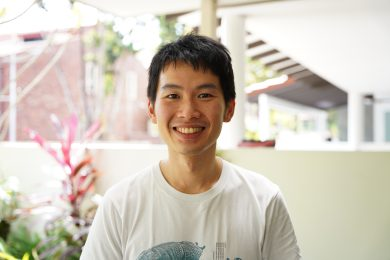
Joshua Hong Yi Tan is a historian and postdoctoral fellow (2024-26) in History at the National University of Singapore. He received his PhD from the University of California, Santa Cruz in 2024, and is currently working on a book project about Chinese International Students in America’s Cold War.